Showing posts with label Africa. Show all posts

Monday, June 7, 2010

Investments in Africa starting to pay off for Bric countries.


Buy low, sell high as they say.  It seems the BRIC nations ( Brazil, Russia, India, China) have taken that advice to heart. There early investments in Africa are showing results.


Africa has garnered attention as the next hot spot for foreign investors—and it's not just the West that's looking to the continent. Despite the recession, direct investment by the BRICs has soared, and at a much faster pace than those of Europe and the U.S.

A look at foreign direct investment from 2007-08 (the latest year available):

Percentage increase in EU investment in Africa, to $27.3 billion

Percentage increase in Brazilian, Russian, and Indian investment in Africa, to $2.35 billion

Percentage increase in Chinese investment in Africa, to $5.5 billion

Percentage decrease in American investment in Africa, to $3.3 billion

Source: Overseas Development Institute


Friday, June 4, 2010

The West must approach Africa in a new light


French President Nicholas Sarkozy said it well this past week at the France-Africa summit when he said this about Africa in today's world: “Africa’s formidable demographics and its considerable resources make it the main reservoir for world economic growth in the decades to come.”

Chatham House has a new report that states the relationship between the West and Africa should be looked at in a new prism. Asian countries seemed to have caught the changing winds especially countries like China, Japan, India but many western countries have yet to fully adjust to the changing reality. Russia has a renewed interest, Brazil as well.  France due to historical reasons will always have interest in Africa and the lastest summit hosted by French President seems try and a new course with Africa.  Reuters has a similar take:
For the past ten years, fundamental change has been taking place across large parts of Africa. Growth rates and stability have increased. Political, regulatory and security reform have deepened. Increasing investment from China, but also Brazil, India, Turkey, South Korea, Argentina and other ambitious emerging powers has acted for the most part as an accelerant.

Even the global financial crisis has in some ways hastened this process, for while in the short and medium term it had a devastating impact on millions across Africa, it has also revealed the true ebb of power from East to West, and encouraged the new economic actors of the G20 to chase access to the 40 percent of the world’s mineral resources, and 1 billion consumers gathered in Africa. Almost as important is the 25 percent of UN General Assembly votes that are represented by the continent’s 53 countries.

Meanwhile, many Western countries seem trapped in a humanitarian conception of Africa.

Popular media coverage and policy judgement is overwhelmed with a perception that Africa is simply a problem continent with little strategic value, except as a space where largess is shown and good things done to make up in some small way for the messy reality of international diplomacy.

This is not only delusional and self indulgent, but damaging. For emerging power interest is showing that Africa is not a space distinct from the rest of the world. Many of their investments are valuable and welcome, but others are as exploitative and damaging as anything under colonialism.

Without a Western strategic and business engagement – bringing with it a focus on sustainability, regulation and transparency, the progress of the past 10 years is unlikely to be sustained. For the truth is that China’s development policy is first and foremost about China’s development, not Africa’s, and as yet the governments of many emerging powers are not focusing enough on ensuring their investments in Africa are sustainable, and therefore equitable.

African leaders have never faced so much choice, but they need to show more foresight as well, for it is only by combining the energy of the emerging East, with the regulation of the West, that Africa’s, and the world’s interests will be served. That needs Western strategic engagement, but more fundamentally it requires more effective leadership from within Africa itself. Post financial crisis, the opportunities for Africa and the world economy, but also the risks, have never been higher.


These are the main highlights of the report by Chatham House:


  • African countries are playing a more strategic role in international affairs. Global players that understand this and develop greater diplomatic and trade relations with African states will be greatly advantaged.

  • For many countries, particularly those that have framed their relations with Africa largely in humanitarian terms, this will require an uncomfortable shift in public and policy perceptions. Without this shift, many of Africa's traditional partners, especially in Europe and North America, will lose global influence and trade advantages to the emerging powers in Asia, Africa and South America.

  • China's re-engagement is for the most part welcome, as is that of the increasing numbers of emerging powers such as Turkey, South Korea and Brazil that see Africa in terms of opportunities - as a place in which to invest, gain market share and win access to resources.

  • Economic fortunes across Africa are now diverging, making it less meaningful to treat Africa as a single entity in international economic negotiations. Despite this, it is in the global interest that the African Union should be granted a permanent place at the G20. In turn, a more focused, sophisticated and strategic African leadership is needed.


Nothing to disagree with, as a matter of fact these are the points that we at Stratsis Incite have been emphasizing all along.

Thursday, June 3, 2010

Graph of the day

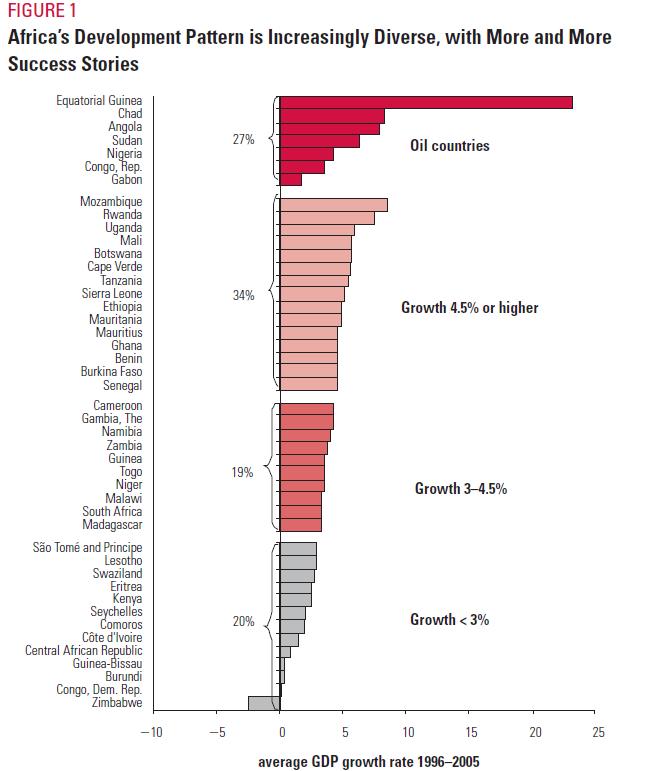
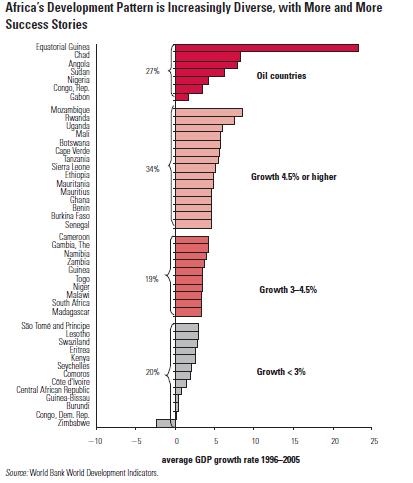
Engrossing graph encountered while researching the effect of Chinese investment in Africa (click on it for the full size version):


From the excellent World Bank report, Africa’s Silk Road.

Tuesday, June 1, 2010

African nations seek reform in major world institutions.

[caption id="" align="aligncenter" width="411" caption="French President Nicolas Sarkozy spoke at a press conference with his South African counterpart Jacob Zuma."][/caption]


African nations voiced a need for change in world major institutions like the World Bank, United Nations, & International Monutary Fund.
More than 50 African countries and France called on Tuesday for an urgent reform of the United Nations Security Council and other institutions so the continent can better be represented in global governance.At the close of the 25th Africa-France summit, France announced plans to ensure African nations are better represented at the G-20 when France takes its turn at the helm of the group.

France and the 39 heads of state and government and 12 other national delegations which met for two days in the Riviera city of Nice called for African states to be fully integrated into the global economy.

The summit reviewed issues from peace and security to climate change but added a new dimension by inviting more than 200 business leaders to encourage development through free enterprise. A charter for good business was adopted to encourage transparency among French businesses operating in Africa and, it is hoped, serve as a model for companies from elsewhere.

France agreed to support the African Union in strengthening security on the continent, including the African Standby Force, and pledged ¤300 million ($369.1 million) for 2010 to 2012 and agreed to train 12,000 African troops for peacekeeping by the African Union and U.N.

French President Nicolas Sarkozy stressed that France, once a colonial ruler on the African continent, wants to strengthen its role on all parts of the continent where countries that are traditional outsiders, notably China, are profiting from multibillion dollar projects.

"France doesn't just want to be friends with francophone countries ... What we want is for France to talk to all of Africa," Mr. Sarkozy said at the closing session. The French president did away with the traditional "dinner among friends" featured at Africa-France summits in which only leaders of former colonies are invited. He held a dinner for all attendees Monday night.

"You are all friends, all of you, and we can build together," he said.

France has been pressing for a greater voice for Africa in critical international forums, such as the G-20 and the Security Council, where there are five permanent members with veto rights—and where Africa, which makes up some 25% of U.N. members, wants a voice.

South African President Jacob Zuma called the summit "very useful."

"We believe strongly that times have changed," he said. Climate change was a major issue at the summit, and the leaders linked it to development.

They agreed to support creation of a renewable energy plan for a sustainable electricity system "based on concrete projects and innovative financing." Among such projects would be use of solar power.

France announced creation of the African Agriculture Fund, an investors' fund, for food distribution and other projects, to initially raise $120 million and that could reach $300 million, according to a final statement.

The next summit is to be held in 2013 in Egypt, where the just-ended meeting was initially meant to be held. Because of concern that Sudanese President Omar al-Bashir, sought by the International Criminal Court for allegedly masterminding atrocities in Darfur, would be invited, France persuaded Cairo to allow the gathering to convene in Nice.

Zimbabwe's President Robert Mugabe, facing EU sanctions travel restrictions, also wasn't invited. The nation of Madagascar, the Indian Ocean island where a 2009 coup toppled an elected president, was excluded from the summit.

More background on previous post about the France-Africa summit.

Saturday, May 29, 2010

Sub-Saharan Africa one of the world's most religious places.

A new Pew Forum poll is out and finds that Sub-Sahara is one of the most religious regions of the world.
A continent that was more known for tribal shamans than for steeples and minarets has, in just 110 years, become one of the world's most religiously devout regions, according to the Pew Forum.

A new massive survey, "Tolerance and Tension: Islam and Christianity in Sub-Saharan Africa," released Thursday, charts how a region that gave birth to the term "global South" is now in the driver's seat in terms of world religious practice.

Twenty percent of the world's Christians now live south of the Sahara Desert and 15 percent of the world's Muslims live there. It's one of the world's most religious places, with at least 85 percent of the population in most countries saying religion is very important to them.

The picture was quite different in 1900, when animist religions comprised the bulk of the population while Muslims and Christians combined made up less than one-quarter.

Animists and traditional African religions have plummeted since then to about 13 percent of the population while conversion rates of Muslims and Christians have soared. Muslim adherents have gone from 11 million in 1900 to 234 million in 2010; Christians have gone from 7 million to 470 million.

Northern Africa is heavily Muslim and southern Africa is mostly Christian but where the two religions meet in a 4,000-mile belt from Somalia to Senegal has often turned violent, especially in Nigeria and Rwanda.

At least 45 percent of the Christians surveyed in Ghana, Zambia, Mozambique, Cameroon, Kenya, Uganda and Chad — which topped the list at 70 percent — consider Muslims to be violent.

Far smaller percentages of Muslims see Christians as violent — Djibouti had the largest percentage at 40 percent, followed by Kenya and Uganda in the low 30s.

From December 2008 to April 2009, the Pew Research Center's Forum on Religion and Public Life conducted 25,000 interviews in more than 60 languages or dialects in 19 countries to ascertain the state of belief and practice among 820 million people in one of the world's most religiously volatile regions.

They found a group of people with heavily pentecostal and messianic beliefs, in both religions. More than half of the Christians surveyed believe Jesus Christ will return to rule the Earth in their lifetimes. More than half of the Christians surveyed believe in the "prosperity gospel," that God will give health and wealth to people if they have enough faith.

Similar attitudes were common among Africa's Muslims: About one-third said they expect the restoration of the caliphate — worldwide Islamic rule — in their lifetimes.

More than half of the Muslims surveyed said society as a whole — not individual women — should decide on whether to wear the veil.

Although Muslims often get blamed for allowing female "circumcision," which is the mutilating of female genitals, the practice is more common among Christians than Muslims in Uganda and Nigeria. However, the highest rates of female circumcision are in the majority Muslim countries of Mali and Djibouti.

And sizable minorities cling to aspects of African religion. More than half the people surveyed in Mali, Tanzania, Senegal and South Africa believed that sacrifices to spirits will protect them from harm. One-quarter of the Muslims and Christians surveyed in several countries said they believed in the power of charms or amulets to protect them.

With most of the populations adhering to one or the other religion, chances are, surveyors said, that neither religion will keep up its current growth rates as the pool of potential converts has shrunk. Neither religion seems to be converting members of the opposing religion in great numbers, they said, with the exception of Uganda where 32 percent of the respondents who were raised Muslim now say they are Christian.

Two wonderful coping religions expanding in a part of the world that's being integrated into globalization at a stunning pace right now--no coincidence, that. One knows how to handle abundance, the other does not.

Whats the status of Democracy in Africa?


Map comes from Freedom House 2010.  Legend is green for free, purple for unfree and yellow for partly free.

Subject is Cato Institute report on state of liberal democracy in Africa by Tony Leon.

Gist:  Economic reforms are what will drive the emergence of liberal democracies on the continent.  Why?  All liberal democracies are also market-oriented economies.

Recent positive trends include (from Daniel Posner and Daniel Young, UCLA):

  • Democracy is increasingly seen as only legit form of government in Africa (What?  No Beijing Consensus?)

  • Elections are now the norm, not the exception

  • Elections are now increasingly contested, often vigorously

  • Lifetime rule is disappearing (since 2000 we see longtime leaders gone in Malawi, Ghana, Kenya, Nigeria and ten others).

  • Of the 18 presidents who bumped up against two-term limits in recent years, not one went extra-constitutional, 9 stepped down, three tried and failed to change constitution, and the six who were successful all got their 3rd terms.


Still, the report concludes, "presidential power remains a key impediment to democratic deepening."

Best short-term fix:  governments eliminate current restrictions on media.

No mention of China's impact, but I come away from the piece more optimistic about Africa's future.

Tuesday, April 27, 2010

Africa weathers global economic crisis

More good news about the prospects of economic growth in Africa. Africa weathered the storm better than in the past and previously thought.
Sub-Saharan Africa is weathering the global financial crisis well and its recovery is expected to be stronger than after previous global downturns, the International Monetary Fund (IMF) said Wednesday.

While some oil-exporting countries and middle-income nations had been hit hard by falling demand for their exports, the continent's low level of integration into world markets meant that it had been relatively sheltered from the crisis, the IMF said in its semi-annual World Economic Outlook report.

Furthermore, while Africa had feared a sharp fall-off in foreign aid and remittances from expatriate Africans as a result of the crisis, the decline had not been as severe as anticipated, the IMF found.

That aid, twinned with improved government policies in many countries meant the downturn had a limited effect on some of the poorest countries.

'Growth in a number of the more fragile economies even accelerated last year,' the IMF noted.

By contrast, middle-income economies that conduct a lot of trade with the rest of the world were among the hardest hit.

South Africa's Gross Domestic Product contracted by 1.8 per cent in 2009. The IMF has predicted 2 per cent growth for the continental powerhouse in 2010.

Growth also slowed in oil-producing countries on the back of shrunken demand and prices for fuel, coming in at around 4 per cent. But the rebound in oil prices meant countries like Nigeria and Angola, Africa's biggest producers, were headed for growth of about 6 per cent this year, the IMF said.

One of the biggest threats to Africa was the tightening of foreign purse strings for development projects, the IMF warned.

The IMF also cautioned that stronger oil prices, while benefiting producer countries, could cause inflation to spiral in others, and that donor aid might be further tightened as leading economies come under pressure to cut public spending.

Political uncertainty also posed a threat to growth in some parts of Africa, particularly West Africa.

After growing by 2 per cent in 2009, the continent as a whole will grow by 4 per cent in 2010, the IMF predicted, a forecast unchanged since last October. That compares with average growth rates for the region of about 6 per cent between 2004 and 2008.

In 2011, the IMF expects the region to grow by 6 per cent.

Tuesday, April 20, 2010

Ten things we have learnt about Africa

A new study by the Pew Center has been released about attitudes from religion to morality in Africa.  It was based on interviews and surveys of 25,000 people and over 19 countries.

Some of the interesting finds are:
1. 75% of South Africans think polygamy is "morally wrong" - bad news for their president, as Jacob Zuma took his third wife earlier this year and is engaged to a fourth. However, the survey also revealed some possible double-standards. While only 7% of Rwandans approved of polygamy (although this did include women), a rather higher number - 17% - of men said they had more than one wife.

2. An overwhelming majority of respondents disapproved of homosexual behaviour. In three countries - Zambia, Kenya and Cameroon - this was a massive 98%. Interestingly, one of the countries with the highest numbers of people - 11% - accepting homosexuals is Uganda, where an MP is trying to get legislation passed which would punish homosexual acts with life in prison and even death in some cases. The former Portuguese colonies of Guinea-Bissau and Mozambique were also relatively tolerant of homosexuality.

3. Africa is probably the world's most religious continent, with more than 80% saying they believed in God in most countries. At least half of the Christians questioned expect Jesus Christ to return to earth during their lifetimes. In Ethiopia, 74% of Christians say they have experienced or witnessed the devil or evil spirits being driven out of a person and in Ghana, 40% of Christians say they have had a direct revelation from God. About half of all Muslims expect to see the reunification of the Islamic world under a single ruler, or caliph, in their lifetimes.
graph

4. Zimbabwe, where the Lemba people say they are the lost tribe of Israel, was not one of the countries surveyed. But 26% of Nigerian Christians said they traced their origins back to Israel or Palestine.

5. Belief in witchcraft is also common - about 40%; a similar percentage also visit traditional healers to cure sickness. Belief in witchcraft is highest in Tanzania with 93% - this is the country where witchdoctors say that magic potions are more effective if they contain body parts of people with albinism. Ethiopia had the lowest levels of belief in witchcraft - at just 17%. Belief that juju or sacred objects can prevent bad things happening was generally lower - between 20 and 30%. In Senegal, however, 75% thought such things worked - far higher than in Tanzania (49%). It may come as a surprise to learn that South Africa had the highest number of people - 52% - saying they took part in ceremonies of traditional religions, or honoured or celebrated their ancestors.
Mohamed Omar Ismail's hand is shown to the crowds before being  chopped off
A majority of people disapproved of Sharia punishments such as amputations


6. Predictably, there was also a religious split concerning alcohol, banned by Islam. Surprisingly, however, more Muslims in Chad (23%) approved of booze, than Ethiopian Christians (5%). This comes as a huge surprise to Ethiopia experts, however, who point out that it is traditional to welcome Orthodox Christian clergy with traditional honey beer when they visit your house. Maybe "alcohol" was only taken to mean spirits by some of the respondents?

7. Attitudes to divorce showed a strong divide along religious lines in Nigeria. A massive 79% of Christians thought it was "morally wrong", while among Muslims, a narrow majority (46-41%) accepted divorce.

8. In recent years, Islamist hardliners in Somalia and Nigeria have introduced strict punishment based on Sharia law, such as amputating the hands of thieves and even stoning to death for adultery. The majority of people disapproved of such Sharia punishments. In Nigeria, they were backed by about 40% of Muslims and less than 10% of Christians. However, a majority did approve of whippings and amputations in Senegal and Mali. In nearby Guinea-Bissau, even 50% of Christians backed them. This was double the rate among Muslims in Ethiopia (25%) - maybe it feels like a more realistic prospect to them, as they share a border with Somalia and most Muslim Ethiopians are ethnic Somalis.
AFRICA HAVE YOUR SAY

The blending of religions like Islam and Christianity with African religions is one way of ensuring survival of traditional religions

BaDumisani, Berlin


9. The survey also asked about material well-being in the world's poorest continent. Not so long ago, Cameroon regularly topped surveys of champagne consumption per head. However, a shocking 71% of Cameroonians surveyed said there were times in the past year when they did not have enough money to buy food. In Ethiopia, which is commonly seen as a country struggling to feed itself, the rate was far lower - at 30% - the lowest of all countries surveyed.

10. Ethiopia did, however, have the lowest numbers of people - 7% - who said they regularly used the internet. Rwanda's President Paul Kagame is striving to turn his country into Africa's answer to Silicon Valley and is being helped by the arrival of several new fibre optic cables off the east coast of Africa. He will be encouraged by the finding that 30% of his countrymen - the highest number - regularly browsed the web. Mobile phones, were far more common - with 81% of respondents in Botswana owning one. Many countries reported more than 50% having phones but here, Rwanda lagged behind at just 35%.

Friday, April 16, 2010

Cyber War from-in Africa?

Recent post at Techdirt.com asks and answers the question whether, the growing online connectivity in Africa is really a bad sign:
In recent months, a number of folks have argued that the arrival of high-speed bandwidth in Africa represents not an opportunity for economic growth, but a dangerous threat to the world. According to these Western pundits who are, incidentally, often promoting their cybersecurity services, computers and connectivity in Africa either pave the way for terrorists to unleash cyber-attacks or for botnet operators to gather millions of unprotected machines into their control. Although we've spent considerable time debunking the hysteria around cyberwar, this new version of the meme is even more unfounded.

Worrying that Africa is going to start producing top-notch hackers in any great quantity seems pretty absurd, when we're talking about a continent where basic literacy, not to mention programming prowess, is a challenge. When Franz-Stefan writes in one of the articles above, that "skillful cybercriminals operating out of an unregulated Internet cafe in the slums of Addis Ababa, Lagos, or Maputo" will create the world's biggest botnets, he shows that he has little understanding of those "slums." For starters, electricity is intermittent enough to make cyberwar a sputtering failure. Secondly, although there are pockets of terrorists on the continent, by and large, elsewhere terrorists have access to far better finances and bandwidth than their comrades in Mogadishu. The fact that those terrorists haven't used the Internet for these types of attacks with any regularity suggests that they place far more faith in tried-and-true methods of terrorizing, and there is every reason to believe that those in Africa will be the same.

Finally, as Miquel Hudin points out, it is ridiculous (and very likely offensive) to think that Africans are any more likely to keep their PCs insecure than anyone else. An American or European who points to Africa as the source of infected botnet computers is wildly hypocritical considering the enormous number of insecure computers that wealthy, educated Westerners have in their homes and offices. It seems quite unlikely that African computers are any more insecure than elsewhere.

Frantic articles painting Africa as just another threat, especially with regard to a great opportunity for the continent - connectivity - are reckless and miss both on-the-ground context and level-headed responses to the challenges of the continent.

The  piece debunks the notion that Africa represents something beyond the norm.

The truth is, Africa is just the latest frontier, and yeah, with the opening connectivity, the worst elements will rise to the fore and make all sorts of mischief. But the bulk of humanity there will go about their business no better or worse than we do, given their resources. The criminals and terrorists and scam artists always flock to the most recently connected places, because they know the rules and security will lag desperately behind.

But the lag isn't infinite, so things settle down eventually, and the process is driven by locals who are legally and successfully exploiting the connectivity and don't care to be associated with such nonsense.

In short, this is a familiar process of frontier integration, and Africa doesn't exactly present a case out of the norm. It's just the case du jour.

Obama's lean toward economic connectivity over democracy: a very smart strategy?

Once again I find myself in complete agreement with the Obama administration's focus on economic connectivity and its prioritization relative to the democracy agenda:
After the imprisonment of Egyptian opposition leader Ayman Nour in 2005, the Bush administration suspended plans for free-trade agreements with Egypt. The Obama administration has now effectively reversed this policy just ahead of Egypt's May parliamentary elections.

During a March 21-23 visit to Egypt, US Trade Representative Ron Kirk said the United States hoped to double trade with Egypt over five years. In a departure not only from President George W. Bush's approach to the Middle East, but also a break with President Barack Obama's speech in Cairo last year, Kirk omitted any linkage to "freedom" and "human rights."

Kirk instead said that Washington's commitment to freedom, democracy, and human rights make the US "an even more attractive environment for investment and partnership." He added that the "partnership between the United States and Egypt in promoting peace and stability in the Middle East is a great foundation on which to build a much stronger economic and commercial relationship."

The Obama administration also seeks to import more goods from so-called Qualified Industrial Zones (QIZs).

These operate under an arrangement according to which goods made in designated industrial areas in Egypt and Jordan, using Israeli inputs, gain duty-free access to the US market.

"We believe [that importing more goods] serves the United States' interest for the reasons that the QIZs were initially put in place, and that it helps provide stability when people have access to gainful employment," Kirk explained.

Nothing will make the Egyptian people more willing to ditch Mubarak's "emergency rule" than rising incomes, a growing economy, and a widespread sense of self-mastery.

Side note: In 2009, exports to Egypt totaled $5.3 billion. The top export categories in 2009 were: machinery, aircraft, cereals (corn and wheat), mineral fuel and oil, and miscellaneous grain, seed and fruit (soybeans). Top U.S. exports of agricultural products in 2008 totaled $2.1 billion, the 8th largest U.S. agriculture export market. Leading categories include: wheat, coarse grains and soybeans.(Office of US Trade Representative)

Tuesday, April 6, 2010

Africa should demand more from China


With an ever growing appetite for raw materials and energy resources, Africa should demand more in return for feeding China's  economic growth.
African states should harness Chinese interest as Beijing's demand for commodities drives growth on the continent and fuels capital investments, an energy conference heard on Tuesday.

China's investment model in Africa, characterised by long-term capital concessional financing, was a developmental "no-brainer," Martyn Davies, head of the Frontier Advisory firm, told the Oil and Gas Africa expo.

"It's very strategic and it's very long-term. The model works provided the extraction continues to take place and the oil continues to flow," he told conference delegates.

Africa and China, which imports a quarter of its oil from the continent, had shown parallel growth patterns since 2000 as energy-hungry Beijing went in search of new oil sources beyond traditional markets, said Davies.

"Africa needs to create the best enabling environment. China's interest in Africa is ours to lose," he told AFP on the sidelines of the conference.

"China's commodity demand is underpinning Africa's growth performance. As trade supply links become more entrenched, a component of China's growth depends on Africa's ability to supply," he said.

China's building up of trade and economic ties with Africa has drawn accusations that the country has taken a "neo-colonialist" attitude toward the continent.

Beijing also has been criticised for befriending pariah regimes in Sudan and Zimbabwe in a cynical bid to lock up supplies of resources needed to fuel expansion of its economy, the world's third largest.

A range of African countries are in a position of strength given that the Chinese are willing to pay top dollar and outbid many western nations for resources. Government accountability and transparency should be the top concerns for whatever nation is dealing with Beijing. Just take at look at the growing scandal in Namibia and President Hu's son.

Sunday, January 31, 2010

More U.S. Military engagement in Africa

The emerging U.S. military strategy for Africa stresses partnership over direct intervention. In other words, we team up with African armies, boost their training and equipment, then let them handle their continent’s security problems themselves. It’s a proxy approach.

Continuation from last post on U.S. Military engagement in Africa, especially Africa Command.


Training exercise, Natural Fire 10 with eastern Africa countries.


Cold War Mode in Africa.

Sunday, January 24, 2010

U.S. to expand other Military services in Africa.

Ever since the creation of African Command, the U.S. has been steadily increasing its presence across the continent diplomatically and military due to the increased importance it holds to the U.S.


Major General William Garrett, commander of U.S. Army Africa recently stated that

AFRICOM and U.S. Army Africa focus and apply resources based on policy guidance from the U.S. government. Currently, the top five priorities for U.S. government engagement in Africa are: supporting strong and stable democracies and good governance; fostering sustained economic growth and development; strengthening public health; preventing, mitigating, and resolving armed conflict; and helping to address transnational challenges.

When applying resources, AFRICOM and U.S. Army Africa work shoulder-to-shoulder with our military and non-military partners as part of a larger U.S. and international effort. This comprehensive approach is the best way to prevent the challenges that you mention in your question.


Last October the US had its biggest military exercise to date which aimed to build trust and confront common challenges on the continent.   East African countries of Kenya, Tanzania, Uganda, Rwanda and Burundi each sent up to 150 soldiers to join 450 US military personnel in Kitgum, Northern Uganda.  Recently
The deputy commander of U.S. naval forces in Africa says he hopes to expand the Navy's Africa Partnership Station program to involve other U.S. military services.

Admiral Harry Harris says as the U.S. Army, Marine Corps and Air Force components for Africa Command become more structured, he hopes they will join the Navy's effort to help build the military capacities of African nations. The admiral told reporters at the Pentagon Tuesday most of the current Africa Partnership Station effort is focused on African naval capabilities, although he said U.S. and partner-nation Navy personnel do some training and construction on land.

He says adding the Army, Marines and Air Force troops would expand the training program, but not change its basic philosophy. "We want to help African nations help themselves solve African problems," said Admiral Harris. "And we don't go in unless we're invited, and we go in with a spirit of full collaboration and partnering with African nations, as well as other countries."

Admiral Harris notes that about 20 countries have participated in the Africa Partnership Station program since it began in 2007, including several European countries and Brazil, as well as about 10 African countries. This year, the program will involve efforts in East, West and Southern Africa, but the admiral says there is so far no plan to expand to Northern Africa.

The Navy program trains African forces in such skills as search and rescue, hostile ship boarding, small boat operations and ship maintenance. This year's West Africa program will include a Nigerian Naval officer as its deputy commander.

Admiral Harris is new to his post, but he says Africa Command is finding much more receptiveness among African nations than it did when it was formed two years ago, and many nations were suspicious of its intentions."

And for the conspiracy minds out there: all your base don't belong to us.
We are not building bases in Africa," he said. "We're not doing those things that the naysayers suggested that we would. Quite the opposite, I believe we're living up to our promise of being a true partner.

Here is a discussion of Africa Command last July at the World Affairs council.


Wednesday, December 30, 2009

Failed Nigerian bomber

The failed terrorist plot by Umar Farouk Abdulmutallab to blow up flight 253 from Amsterdam to Detroit has brought a new and  hard-nosed look at Africa, primarily  Nigeria.  Ration and calm should prevail when looking at the start point of the alledged terrorist.  Nigeria doesn't have the same problem like Somali that easily makes a case to send in predator drones.  The case might be a one off based on research by Reuters.
it is Umar Abdulmutallab’s foreign education rather than his background in Muslim northern Nigeria that is seen as having radicalised him.

The relatively affluent upbringing is not too dissimilar to that of some of the Sept. 11 attackers or Al Qaeda recruits for other attacks, but makes him a particular exception in Nigeria. Most people live on less than $2 a day and many would give almost anything just to have got aboard the plane he tried to blow up. Every year, tens of thousands of Abdulmutallab’s compatriots brave deserts, oceans and unsympathetic immigration police to try to get to the West for just a taste of the chances he had and to take whatever work they can get to better themselves and their families.

Although only around half of Nigeria’s population is Muslim, that still gives it the sixth biggest Muslim population in the world.

But while outbreaks of religious violence in northern Nigeria have killed thousands of people over the past decade – hundreds died in July in clashes between security forces and the radical Boko Haram sect – bloodshed has often also been just as tied to political and ethnic factors.

Islamic jurisprudence in Nigeria is based on the moderate Maliki school of Sunni Islam and Boko Haram’s ideology is dismissed by the country’s Muslim leaders and most believers.

The Al-Qaeda connection.


There more links to Yemen and their Al-Qaeda affiliated groups than to Nigerian ones.
The Nigerian accused of trying to blow up a Detroit-bound airliner had his suicide mission personally blessed in Yemen by Anwar al-Awlaki, the same Muslim imam suspected of radicalizing the Fort Hood shooting suspect, a U.S. intelligence source has told The Washington Times.

The intelligence official, who is familiar with the FBI's interrogation of Umar Farouk Abdulmutallab, said the bombing suspect has boasted of his jihad training during interrogation by the FBI and has said it included final exhortations by Mr. al-Awlaki.

"It was Awlaki who indoctrinated him," the official said. "He was told, 'You are going to be the tip of the spear of the Muslim nation.'"

In his FBI interrogation, according to the U.S. intelligence official, Mr. Abdulmutallab spoke of being in a room in Yemen receiving Muslim blessings and prayers from Mr. al-Awlaki, along with a number of other men "all covered up in white martyrs' garments," and known only by code names and "abu" honorifics.

The official said such clothing and the lack of familiarity among the men suggests al Qaeda in the Arabian Peninsula intends to use the men in that room in suicide missions.

The intelligence official's description comes in the wake of several reports that Yemen is breeding scores of jihadists ready to strike the West.

Yemen's top diplomat said Tuesday that hundreds of al Qaeda militants are in his country and pleaded for foreign help and intelligence in rooting them out.

They may actually plan attacks like the one we have just had in Detroit. There are maybe hundreds of them -- 200, 300, Foreign Minister Abu Bakr al-Qirbi told the Times of London.The positive side out of all the attention, is that security matters will  in general be taken more seriously.  More resources and possibly man power will be allocated across the continent.

Yemen with help of Saudi Arabia is involved in proxy war from Iran.


Yemen's War on Terror in detail below.


The same mistake shouldn't happen with Yemen that was allowed to happen  in Afghanistan.